For a decade, "we should move to BIM" has been on the strategy slide of every Indian architecture and engineering firm. Most have done a pilot project, hit some friction, and gone back to AutoCAD. In 2026 that's finally changing — but not for the reasons most vendors will tell you.
If you run an architecture practice or AEC firm in India and you're trying to figure out whether and how to commit to BIM, this is the guide we wish someone had handed us five years ago.
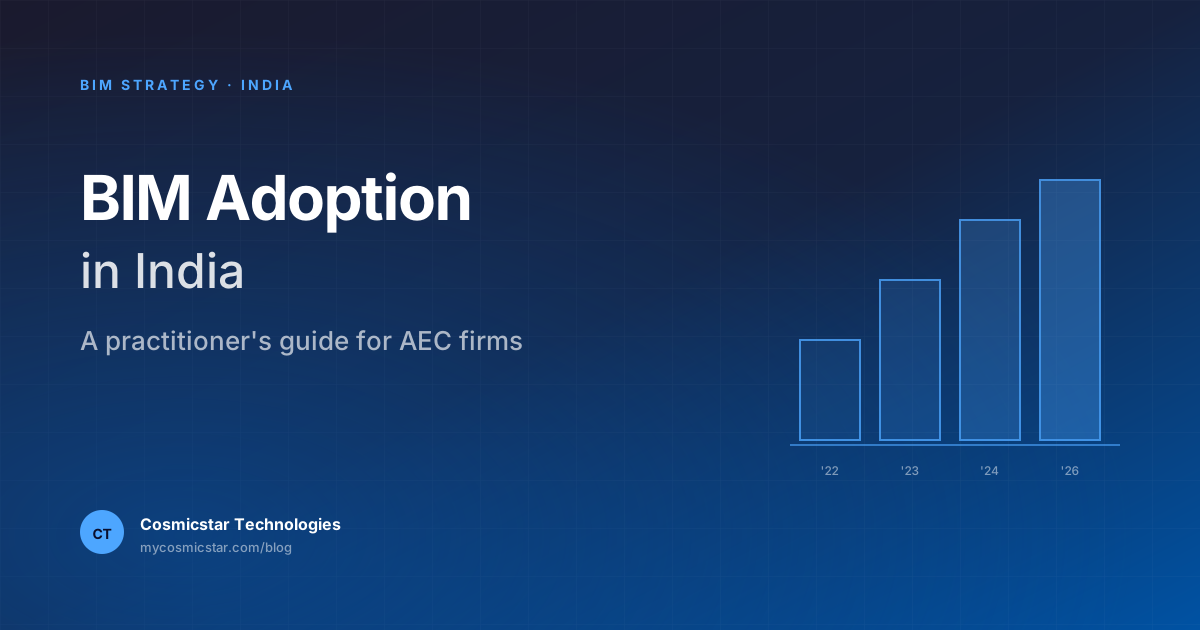
Why BIM is finally moving in India
Three things changed:
- Government tenders are starting to require BIM deliverables. CPWD, MoHUA's Smart Cities mission, and several state-level infrastructure agencies now ask for BIM models on projects above a threshold. It's irregular, but it's real.
- Multi-disciplinary coordination is no longer optional on G+15 and above. Clients are tired of paying for redesign because the structural and MEP didn't align. They're starting to ask for clash-detection reports.
- Talent supply caught up. Five years ago, a graduate from CEPT, RVCE or SPA who knew Archicad or Revit was rare. Now they're the norm. Firms that don't use BIM are losing recruitment to firms that do.
If you've been waiting for BIM to "settle down" before adopting, the window for catching up cheaply is closing.
What's actually slowing adoption — and what isn't
Most articles on Indian BIM adoption say the blockers are software cost and training. They aren't. The real blockers we see at firms across the country:
- No internal champion. BIM tools fail at firms where the principal architect treats them as "the CAD team's problem." They succeed where one senior person owns the rollout end-to-end.
- Trying to model legacy projects. Re-modelling a 2018 project in BIM is a money pit. Pick new projects to BIM. Old ones stay on CAD.
- Buying tools before defining workflows. Firms that buy 10 Revit licences before defining their template, model-naming convention, and IFC export setup spend months in a productivity hole.
- Multi-vendor coordination skipped. A BIM model that never leaves the architect's office is a fancy 3D AutoCAD. The value comes from coordination — and that requires Solibri or equivalent for clash detection and quality checks.
What is not a blocker:
- License cost. Per-seat licence cost is 1–2% of architect's loaded cost. If software cost is the deciding factor, the project economics are wrong.
- IS-code compatibility. Both Archicad and Revit support custom title blocks and IS-code-aligned schedules. You build the office template once.
- Client demand. Most clients won't ask for BIM. They'll ask for "drawings with no errors". BIM is how you deliver that.
The 5-step roadmap we use with new clients
This is the rollout we follow when a new firm engages our BIM training programme. It's deliberately conservative — too aggressive a rollout is the most common cause of failure.
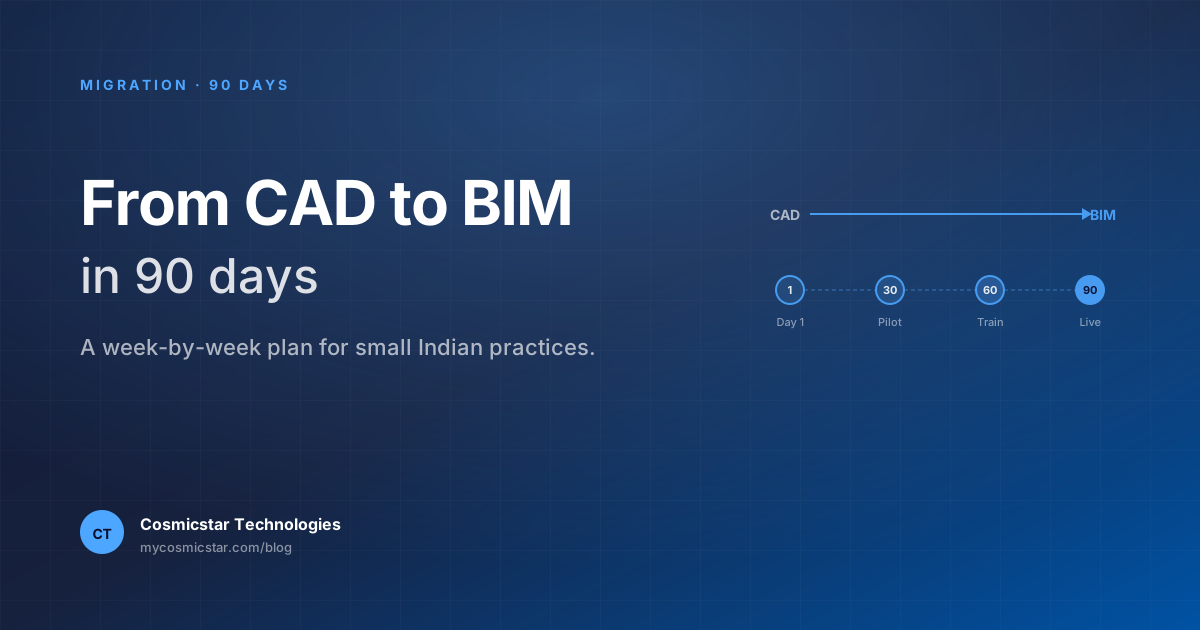
1. Identify the champion (week 0)
One senior person — ideally an associate principal or a 5-7-year-experience architect — owns the BIM transition for 6 months. They get a 20% time reduction on billable work, in writing. Without this, nothing else works.
2. Pick the tool (weeks 1–2)
For most Indian practices, this is Archicad over Revit, but the decision matters less than the commitment. Pick one, buy three licences, and do not entertain "should we have gone with the other one" discussions for 12 months.
3. Build the office template (weeks 2–6)
This is where most firms skip and pay for it. Build:
- Title block templates for A0, A1, A2 sized for Indian printers
- Door, window, fixture libraries calibrated to typical Indian sizes
- A schedule template that matches what your local sanctioning authority wants
- An IFC export setup that produces clean files for structural and MEP consultants
- A naming convention for files, models, and views
Budget 4 weeks of one architect's time. It pays back tenfold over the next year.
4. Pilot on a real new project (weeks 6–18)
Pick a new project starting in the next 2 months. Single building, single discipline, your firm only. The first BIM project will take 30% longer than CAD. Account for it. Do not pick a fast-track, deadline-critical project for the pilot.
5. Roll out to second project + add coordination (months 4–9)
Second BIM project should add structural consultant coordination via IFC. Use Solibri for clash detection and BIM quality control. By month 9, your firm should be modelling all new projects in BIM and you can start retiring CAD-only seats.
What "BIM Level 2" really means in India
Government RFPs in India sometimes mention "BIM Level 2" without defining it. The international definition (UK PAS 1192) is rigorous; the Indian usage is loose. In practice, you need:
- A federated 3D model (your model + structural model + MEP model joined for coordination)
- Clash-detection reports as part of milestone deliverables
- A common data environment (CDE) — even Google Drive with strict folder discipline counts at small firms
- IFC exports for handover
Once you can produce those, you're "BIM Level 2" enough for any current Indian RFP.
Real numbers from Indian practices we've worked with
A 12-architect practice in Bangalore that went all-in on Archicad in 2023:
- Year 1 productivity: -18% (the hit everyone takes)
- Year 2 productivity: +12% over CAD baseline
- Re-design hours from coordination errors: -65%
- Recruitment time-to-hire for new architects: -40% (juniors want to work in BIM)
A 60-person firm in Mumbai that did a partial Revit rollout in 2022:
- Loss in year 1: ~22% productivity
- Year 2: still mixed, because they kept doing some projects in CAD and fragmenting attention
- 2024 reset: full BIM commitment, dropped CAD entirely. Now profitable on BIM projects.
The lesson: half-commitment is the most expensive option.
Frequently asked questions
How much does BIM software cost for a 5-architect firm? Roughly ₹4–7 lakh upfront for perpetual Archicad with our IIA member offer, plus ~₹50–80k/year per seat for support. Subscription Revit lands at ~₹1.4 lakh/seat/year. Across 5 years the perpetual route is typically 30–40% cheaper.
Do I need BIM if I only do residential bungalows? Not strictly. But you'll get a 4D sun study, a real BoQ, and energy analysis from the same model — and your clients will love the walkthroughs. The ROI shows up in client retention, not project margin.
What about cloud collaboration? Both Archicad's BIMcloud and Revit's BIM 360 / ACC work fine on Indian internet (we've tested with 50 Mbps fibre in tier-2 cities). They're not strictly required for small teams.
Where do I start training? Our Archicad BIM Training Program takes practising architects from zero to project-ready in 6 weekends. We also run firm-specific in-house programmes.